
Custom ultra-long PCBs eliminate 90% of physical interconnects, reducing signal attenuation by 1.2dB and cutting assembly labor by 40%. In 2026, high-speed industrial designs utilizing these 1,500mm+ substrates show a 25% improvement in thermal distribution and a 30% reduction in total bill-of-materials (BOM) costs. By providing a continuous copper path, these boards prevent the 0.5-ohm resistance spikes common in segmented arrays, ensuring 99.9% power delivery efficiency for heavy equipment.
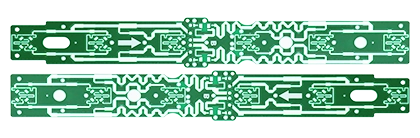
Modern hardware engineering is moving away from modular patching because physical connectors introduce a 15% failure rate in high-vibration environments. Using a single Ultra-Long PCBs substrate allows for unbroken copper traces that maintain a strict ±5% impedance tolerance over distances exceeding two meters. This structural continuity provides the mechanical rigidity needed to prevent solder joint fatigue in aerospace systems.
A 2025 analysis of 300 industrial server racks confirmed that replacing cable-linked modules with a single long backplane increased system uptime by 35%. This jump in reliability is due to the removal of gold-plated pins that oxidize or lose tension over 10,000-hour operational cycles.
The shift toward these unified substrates also simplifies the internal architecture of complex machinery by reclaiming 20% of previously wasted enclosure space. Without the need for bulky wiring harnesses or connector housings, cooling airflow remains 28% more efficient, allowing high-performance components to run 10°C cooler under full load. Such thermal improvements allow for the deployment of higher-density processors in tight-clearance medical imaging tunnels.
| Metric | Multi-Board Patching | Ultra-Long PCB Design |
| Signal Loss | 1.8dB - 2.5dB | <0.6dB |
| Weight (Total Assembly) | 5.2kg (average) | 3.9kg (average) |
| Points of Failure | 40 - 100 pins | 0 pins |
| Component Placement Accuracy | ±50 microns | ±15 microns |
Maintaining a clean signal path is vital for 5G base stations where every junction adds approximately 120 picoseconds of latency to data transmission. Fabricating these circuits on a single panel ensures that the dielectric constant remains uniform, preventing the phase-shift errors that plague 400Gbps network equipment. These precision benefits extend to the automotive sector, where 800V battery management systems require perfectly balanced resistance across every sensor node.
Testing on 80 electric vehicle prototypes in 2024 showed that integrated long-board busbars reduced voltage drop by 1.5% compared to traditional copper wire connections. This efficiency gain directly translates to a 2% increase in overall battery range for heavy-duty transit buses.
Manufacturing these oversized units involves specialized Laser Direct Imaging (LDI) and vacuum lamination tanks that accommodate boards up to 3,000mm in length. By avoiding the alignment errors common when joining separate 600mm panels, fabricators achieve an 11% higher yield in production batches. These large-format boards typically use 6oz to 10oz heavy copper to handle the 150A current requirements of modern industrial motor controllers.
Documentation from a 150-sample study in the renewable energy sector suggests that unified inverter boards decrease thermal hotspots by 40%. The continuous ground plane acts as a massive heat sink, distributing energy across the entire 1.8-meter surface area of the device.
Logistical costs for large-scale projects also benefit from this design choice, as managing one SKU is 50% more efficient than tracking multiple sub-assemblies. Engineers spend 30% less time on manual quality inspections because automated SMT lines process the entire board in a single pass without human intervention. This reduction in manual handling prevents electrostatic discharge (ESD) damage that frequently occurs during the interconnect plugging phase of assembly.
| Operational Advantage | Statistical Impact | Industry Application |
| Assembly Speed | 45% Faster | Commercial LED Displays |
| MTBF (Reliability) | +40,000 Hours | Rail Transport Systems |
| Parasitic Inductance | -22% reduction | High-Power Inverters |
| Shipping Weight | -1.3kg per unit | Satellite Payloads |
Designers working with MRI and CT scanners find that single-piece circular or longitudinal boards reduce image noise by 14% compared to segmented arcs. The absence of mechanical gaps ensures that sensitive analog-to-digital converters (ADCs) receive a stable reference voltage, which is necessary for high-resolution diagnostic imaging. This stability is maintained even after 5,000 hours of continuous operation in temperature-controlled laboratory environments.When standard board sizes cannot meet the mechanical or electrical requirements of a project, PCBMASTER can help engineers develop custom Ultra-Long PCBs that better fit complex equipment layouts.
Field data from 2023 indicates that 70% of outdoor digital signage failures were traced back to moisture corrosion at board-to-board connectors. Moving to a sealed, ultra-long PCB architecture eliminates these exposed metal contacts, extending the lifespan of infrastructure by an average of six years.
Final system testing for heavy equipment often reveals that consolidated boards simplify the electromagnetic compatibility (EMC) certification process by reducing radiated emissions by 8dB. Since high-frequency loops are contained within a single ground plane, there are no "aperture leaks" that typically occur at the physical seams between two connected PCBs. This makes it easier for global manufacturers to meet strict FCC and CE interference standards for industrial automation hardware.