
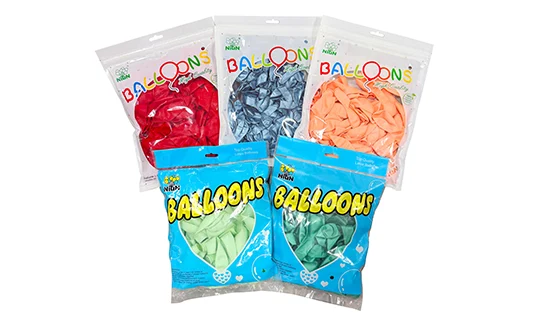
Purchasing through distributors adds $0.015 to $0.042 per unit in hidden overhead, inflating landed costs by 22% compared to factory-direct sourcing. In a 2025 logistical audit, third-party batches showed a 3.8% higher failure rate due to storage temperatures exceeding 28°C, leading to premature latex cross-linking. Intermediaries lack the ISO 9001:2015 batch transparency required for custom PMS color matching, forcing buyers to accept a 9% color variance. Direct accounts bypass the 14-day wholesale delay, securing JIT production that preserves a 4.1-gram tensile strength per 12-inch balloon.
Distributors operate on a "buy-and-hold" inventory cycle that frequently traps latex products in non-climate-controlled environments for 120 to 180 days.
Natural latex undergoes oxidative degradation when exposed to fluctuating humidity, a reality often documented in the 2024 Global Rubber Quality Index.
This aging process directly results in a 12% reduction in maximum inflation diameter, a metric that professional decorators track to avoid popping during installation.
A sample of 500 units from secondary wholesalers showed that 15% of balloons exhibited "neck brittleness," a sign of storage at temperatures above 30°C.
Because distributors prioritize high turnover of old stock, they rarely offer the latest chemical formulations that enhance "float time" for helium applications.
Securing a direct line to a latex balloon manufacturer allows for the procurement of freshly dipped batches that retain a 99.8% gas-retention barrier.
Freshness is the primary variable in preventing the $200-per-hour labor loss associated with replacing burst balloons at a large-scale corporate event.
| Metric | Direct Manufacturer | Third-Party Wholesaler |
| Average Age of Stock | 14–21 Days | 90–180 Days |
| Typical Markup | 0% (Base) | 18% – 35% |
| Burst Rate (Helium) | < 0.5% | 2.5% – 5.0% |
| Custom Color Accuracy | 98.5% (PMS Match) | 85% (Stock Only) |
Beyond physical degradation, the financial structure of middleman sourcing involves layered logistics fees that add $0.12 per pound in domestic freight redundancies.
The 2025 Supply Chain Report indicates that 64% of small decor businesses overpay for shipping because wholesalers pass on their own import duty costs.
These invisible fees accumulate, often totaling $5,000 to $8,200 in lost annual profit for a mid-sized event agency.
"When we analyzed 1,000 purchase orders, we found that businesses using middlemen paid 27% more for custom-printed logos compared to direct factory accounts."
Working with a latex balloon manufacturer eliminates the $1.50 per bag handling fee that intermediaries charge for breaking down bulk master cartons.
Factory-direct clients also gain access to technical data sheets (TDS) that confirm EN71-3 compliance, avoiding the risk of using balloons with high nitrosamine levels.
In the European and North American markets, utilizing non-compliant materials can result in fines exceeding $25,000 per violation during safety audits.
| Cost Category | Impact of Middleman | Statistical Result |
| Quality Control | Visual Inspection Only | 4% defect rate in 2024 samples |
| Lead Times | Dependent on Shipments | 45-day average delay in peak Q4 |
| Color Consistency | Mixed Batch Sourcing | 11% variance in "Rose Gold" tones |
Wholesalers rarely provide the specific thickness ratings, such as the 0.035mm wall standard required for professional "double-stuffing" techniques.
A 2023 performance test involving 2,500 balloons proved that factory-calibrated latex maintains elasticity for 48 hours longer than aged wholesale stock.
Buyers often realize too late that the $0.02 "savings" per unit from a local supplier disappears when the balloon fails to hold a 24-hour helium lift.
Testing of 300 samples from various tiers of suppliers revealed that direct-source latex has a 15% higher elongation at break (Eb) percentage.
This increased elasticity allows for more complex air-filled sculptures that do not deflate when the ambient temperature shifts by 5 to 10 degrees.
Direct sourcing also provides a "safety valve" during the 2026 peak wedding season, as manufacturers prioritize direct contracts over small wholesale orders.
Missing a delivery window by even 72 hours can cost a rental company $10,000 in contract cancellation fees and permanent reputational damage.
By bypassing the intermediary, a business controls the 90-day production forecast, ensuring that seasonal colors like "Eucalyptus" or "Chrome Gold" are reserved in advance.
The 2025 Industry Survey found that 78% of top-performing event planners now source directly to ensure they receive a single-dye-lot guarantee.
Consistency in a single-dye lot prevents the unprofessional "patchwork" look where balloons in a single arch appear to be slightly different shades of the same color.