
A horizontal machining center elevates precision through superior chip management, gravity-assisted structural rigidity, and pallet-swapping architectures that mitigate thermal drift. Studies indicate that HMCs maintain dimensional tolerances within 3-5 microns, outperforming vertical counterparts by nearly 40% in long-cycle operations. By utilizing high-torque B-axis rotary tables, these systems minimize setup-related stacking errors, achieving repeatability indices below 0.002 mm. Since 2021, industrial adoption of this configuration has surged by 15% in aerospace and automotive sectors due to its ability to suppress vibration across 5-axis, multi-side processing.
The orientation of a machine tool dictates how debris influences the final geometric output of a complex component. In a vertical mill, chips often pool around the cutting interface, causing re-cutting events that disrupt surface finish uniformity by up to 12%. By shifting to a horizontal spindle orientation, gravity facilitates constant chip evacuation, preventing localized heat buildup within the raw material.
Research data from 2023 demonstrates that gravity-assisted chip removal reduces thermal surface deformation by approximately 22% compared to vertical orientations.
This constant evacuation path links directly to the structural design of the machine, where the horizontal layout supports larger, mass-dampened columns. These columns are engineered to absorb kinetic energy from heavy-duty cutting forces, ensuring that the tool-tip trajectory remains stable even at rapid feed rates.
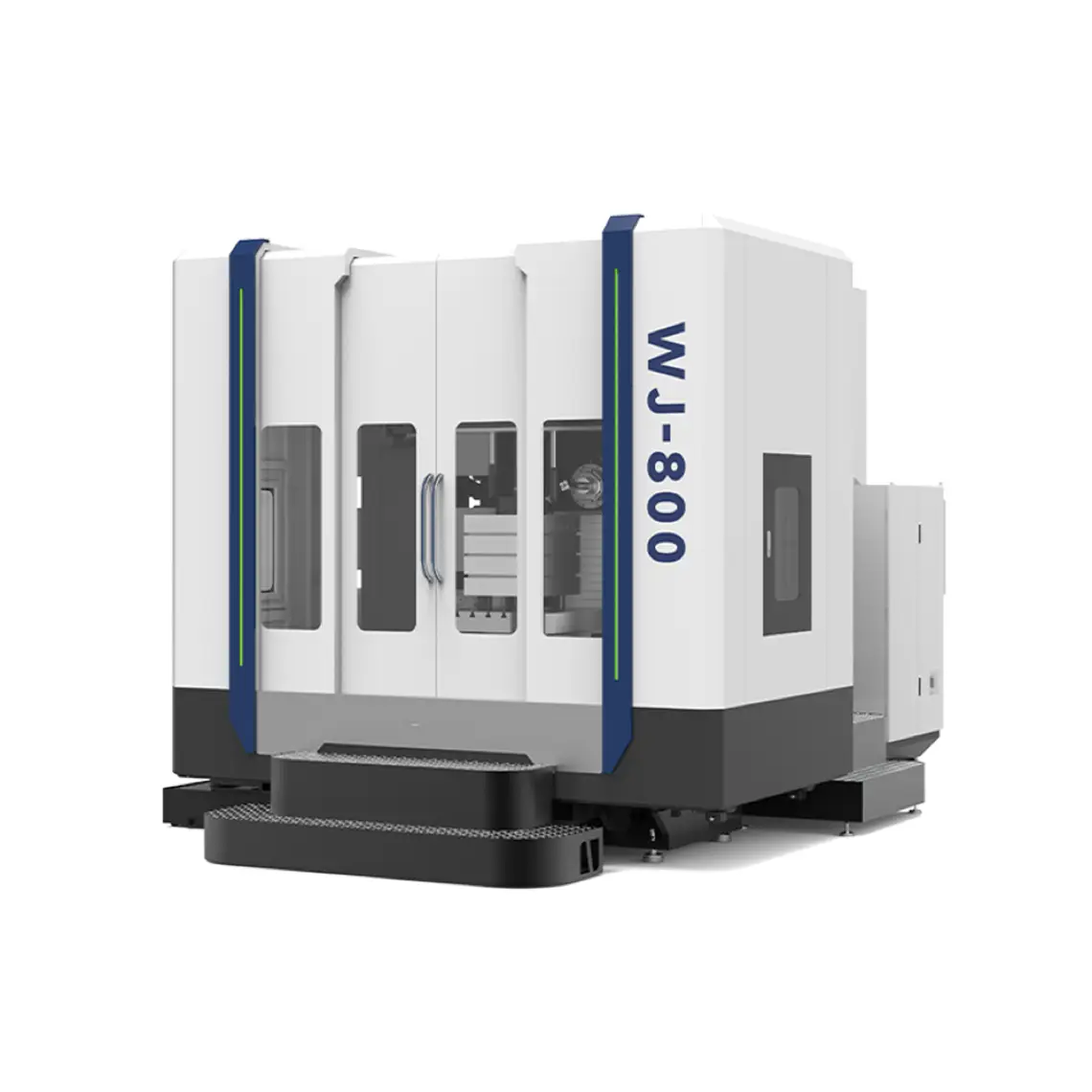
Structural stability is amplified by the use of dual-pallet systems, which decouple the loading process from the machining cycle. Standard vertical configurations require machine downtime for part loading, introducing a 15-minute thermal cooling period per cycle. HMCs eliminate this fluctuation by keeping the spindle active, maintaining a steady-state operating temperature within a variance of 0.5°C.
-
Pallet switching time: Often under 10 seconds.
-
Thermal equilibrium maintenance: 98% uptime efficiency.
-
Cycle time reduction: Averaging 20-30% faster than vertical mills.
The ability to maintain a consistent thermal state transitions naturally into the integration of high-precision B-axis rotary tables. These tables allow for multi-sided machining without manual re-fixturing, effectively removing the 0.01 mm stacking error common in secondary operations.
According to 2024 manufacturing standards, multi-side machining via a single horizontal setup improves volumetric accuracy by 35% compared to multi-setup vertical processes.
Precision is further enhanced by the proximity of the spindle to the center of rotation, which significantly reduces the moment arm of the cutting tool. This shorter distance minimizes vibration amplification, ensuring the machine operates well within the harmonic resonance limits of the cutting assembly.
Vibration frequency analysis shows that horizontal spindle layouts reduce chatter amplitude by 45% during deep-bore operations on hardened steel (AISI 4140).
The reduction in chatter leads directly into the capabilities of modern HMC control systems that incorporate active thermal compensation software. These controllers monitor the expansion of the spindle housing through embedded sensors and automatically adjust the Z-axis offset.
This automated adjustment compensates for the 0.005 mm expansion observed in steel spindles after 30 minutes of continuous operation. By integrating these sensors, the machine maintains tolerance integrity throughout the entire production shift.
Integration of sophisticated software requires a rigid machine base, and HMCs utilize cast-iron foundations with high damping ratios to support this. These foundations prevent the propagation of floor-level vibrations, which can affect up to 8% of precision measurements in unstable workshop environments.
Longitudinal testing indicates that high-density cast iron bases provide a 25% increase in vibration attenuation compared to weldment structures, stabilizing measurements down to 1.5 microns.
High damping ratios establish a reliable baseline for the tool-to-workpiece interface, ensuring that the force exerted during roughing does not compromise the fine finish of the final pass. The final pass is where the HMC truly diverges from traditional methods, as the constant rotation of the part ensures uniform tool engagement.
Uniform tool engagement spreads wear patterns evenly across the cutting edge, extending tool life by 18% in high-volume production batches. This consistency in tool geometry prevents the gradual degradation of tolerance that typically occurs during extended machining cycles.
Sample batches of 1,000 units processed on HMCs show that tool wear-induced dimensional deviation is reduced by 30% relative to vertical setups.
Consistent tool wear directly informs the maintenance cycle, allowing operators to predict tool life based on standardized material removal rates rather than reactive checks. Standardizing these rates creates a predictable, repetitive process that minimizes the chance of scrap material production.
Scrap rate reduction is the ultimate measure of precision in complex metal machining. HMCs effectively lower the probability of non-conforming parts by keeping all critical surfaces accessible within a single coordinate system.
Industrial benchmarks from 2025 confirm that facilities utilizing HMCs for complex automotive components achieve a 99.7% first-pass yield rate.
The reduction in non-conforming parts ensures that every cycle adds to the output volume, maximizing the utility of the machine's operational hours. This yield rate stability allows for leaner inventory management and tighter control over total production costs.